Showing posts with label B'more. Show all posts

Good Morning, Baltimore

Posted on 8/20/2014 09:45:00 AM In:
I climbed up the non-steps side of Federal Hill (yes, that Federal Hill) with my kids yesterday because they thought "it would be fun" and because I hadn't done anything like that in some time so I guess it was high time I nearly broke an ankle.  Note to self: next time you decide to scale the wall of an embankment, three year old thongs are probably not the most appropriate of shoes. 

It was kind of worth it, though, because I managed to get this great panoramic shot on my phone.


click to embiggen
Word of the day: sacrifice.

Share:

Sunbather

Posted on 6/15/2013 08:21:00 PM In:

It's so nice of Baltimore to put these tanning beds out at the Inner Harbor for folks to use.  Wait, what's that officer? These are sculptures and not for tanning? OK, we'll move it along.

Share:

Miss Information

Posted on 5/10/2011 08:38:00 AM In:
Years before I met The KingofHearts, I was dating a guy who went to school in Baltimore.  I spent lots of time there and in the Mount Vernon area in particular.  I love the city as much as I love Washington, D.C. but for entirely different reasons.  No two cities could be any more different.  I'm not even sure I can explain how.  They just are, hon.  

I have always been fascinated by the Mount Vernon Place United Method Church from the first time I saw it's gorgeous red doors.


Not being a Methodist, I've not spent any time inside.  I tend to think all large churches are tourist attractions - can't imagine how I got that impression - so I keep trying to see the inside.  But every time I've been by this building, which is a proper functioning church, it's either been closed or they were in the act of holding services and walking in with a camera to gawk seemed... well, rude. 

I've pointed it out to lot of people as we drive around the Other Washington Monument though, because on the outer corner of the foundation, this plaque is displayed.  And as we pass by, I generally say something all know-it-all and tourist-guide-y like "See that church?  That's the church where Francis Scott Key died."  And I'm all impressed with myself because I know Stuff.

Inscription reads: 
Francis Scott Key, author of the Star Spangled Banner departed this life on the site of this building, 
January 11, 1843. 
And this be our motto "in God is our trust." - Key
Baltimore Chapter, D.A.R

It wasn't until I was doing a little research for this post that I finally asked myself after a decade-plus of seeing and passing this plaque, "Wait, what?  He died in a church?  That's odd."  So I consulted my local Baltimore history professor and learned the Whole Story.  And the Whole Story is that Francis Scott Key died on this site, but not in this church.  From the Mt. Vernon Place website:

The church sits on the site of the mansion of Charles Howard, who was married to Elizabeth Phoebe Key. Her father, Francis Scott Key, the author of The Star Spangled Banner, died here in his daughter's home. A plaque observing his death adorns the southern outside church wall, marking the church as a highlighted location on the National Historic Register. The cost of this grand structure, including land, building, and furnishings was $400,000.

Well, color me embarrassed. Turns out the church was completed in 1872, while Francis Scott Key died from pleuritis in 1843.

Let that be a lesson to you.  Do not believe everything I tell you on a free tour around the city.  Between The KoH and I, the Underground family are piss-poor tour guides.

But on second thought, it was a free tour, so what do you want for nothing?  Eggs in your beer?

Despite it's only tenuous connection to the history I thought it had, I love this building.  It's a great example of Gothic Revival Architecture (I looked that up to make sure I was right before I said anything) and I love the different colored stones used in the exterior.  More from the website:

The building is made six of different types of stone. Its extraordinary color (especially when wet) comes from the use of the now rare green serpentine marble from the Falls Road area of Baltimore County, and buff and red sandstone trim. Because neither stone wears well, major repairs and replacements of individual pieces with more stable materials were necessary in 1932 and again in 1978.

It really is more beautiful in the rain.  However, the steps are more slippery too.  Some people will be able to tell you that from experience. 

More pictures:


Share:

Star Spangled Banner House

Posted on 5/09/2011 09:06:00 AM In:

In our continuing series of tiny places in Baltimore, our next stop is the Pickersgill house. OK, it's actually the Star Spangled Banner Flag House and 1812 Museum, but first, it was Mary Pickersgill's house.


I know that if you ask your average man on the street, 'Who sewed the Star Spangled Banner,' 90% will say Betsy Ross.  But even if you believe that Betsy Ross actually sewed the first flag, the Star Spangled Banner wasn't the first flag.  So you'd still be wrong.  It was Mary Pickersgill.


Mary Young Pickersgill was a young flag maker in Baltimore.  Mary was born in 1776, coincidentally.  She married John Pickersgill at nineteen, moved to Philadelphia with him, and then came to Baltimore when she lost her husband in 1807.  She had a widowed mother and a daughter to take care of, so she started a flag-making business. Mary is a fascinating individual.  Here's what the Wikipedia has to say about her:

One hundred and fifty years before American women entered the business world, Pickersgill was a successful businesswoman and philanthropist. She actively addressed social issues such as housing, job placement assistance, and financial aid for disadvantaged women—decades before these issues were prominent concerns in society. From 1828 until 1851 she was president of the Impartial Female Humane Society that helped impoverished families with school vouchers for children and employment for women. Under her presidency the society established a home for aged women in 1850. By 1869 there were forty-eight residents and, in 1863, a Men’s Home was added, with 27 residents. Today the Impartial Female Humane Society is known as the Pickersgill Retirement Community, located in Towson, Maryland, a living testimony of Pickersgill’s humanitarian contributions to society.

The fact that she was able to accomplish all this in 19th century America makes me want sit down for dinner with her right then and there.  I don't care how big a flag she sewed. 

But her big claim to fame is that in 1813, some dudes from the nearby Fort McHenry (Ah, I love it when a plan comes together) came by her business because General Armistead had ordered "a flag so large that the British would have no difficulty seeing it from a distance" to fly over his fort.  And by 'so large,' he meant REALLY BIG.  The actual Star Spangled Banner was thirty feet by forty-two feet.  Even when you see the actual flag in the Smithsonian, it's really had to conceptualize, because it's lying off in a room (or as in old school days, hanging on a wall) and a good portion of the flag is now missing.  Fortunately, the Star Spangled Banner museum has an actual size replica for a good visual.

 
That's a staircase inside the building you see behind it.

Still don't get the magnitude?  Check out this photo with The Dormouse as scale.

Sure, she's little, but even I barely only rate one more stripe's height.

There's an adult soldier standing in this photo from the flag's centennial in 1914.  You can see that he's not a lot bigger than The Dormouse.

See what I mean? When General Armistead said he wanted a "very large flag," it was only because he was alive in the 1800s and back then they couldn't say "big-assed flag."

Mary and two nieces sewed this flag and charged the United State Government $544.74 for the job. The material was cut out at her home on Albermarle Street and then carried to a brewery that was close by where they actually sewed the strips together.

View of the Pickersgill house - on the corner - from the second story of the museum.

Actual pieces of the flag.  One of the reasons so much of it is missing now is that over the years, people cut off bits of it as souvenirs.

So you know the rest of the story.  The next year, in 1814, it was that flag flying over the Fort that Francis Scott Key watched for when he was sitting on that British ship out in the harbor through the battle.  And it was only because the flag was so damn big that Francis could see it to be inspired by it anyway. So in a way, it was Mary Pickersgill and General Armistead that we have to thank for our national anthem.  But I guess Francis Scott Key did some stuff too.

Share:

Westminster, Part Deux

Posted on 5/06/2011 07:53:00 AM In:
Besides it's most famous resident, Westminster is home to a few other prominent Baltimoreans and curiosities I didn't have room to post yesterday.  The first Mayor of Baltimore, Francis Scott Key's son, and James McHenry of Fort McHenry fame are all neighbors of Edgar Allan Poe in perpetuity.

McHenry family plot

Westminster also has several of these bent marble headstones. I guess two hundred years of time affects even the strongest substance.


This one has been reinforced with metal slats underneath to make sure it is preserved.  There's a plaque next to it that says it was featured in Ripley's Believe it of Not, but I wasn't able to find the article or program or whatever the feature was in.  I did, however, find this.  And I'm thinking that I'm gonna have to bookmark this so that the next time I'm having a rough day at work, I can pull this up and get through 'til quitting time.  

Here's another gravity-defying headstone:


Some of the stones are so old the inscriptions aren't even legible anymore.  I think this one has 1791 as the death date, but it was hard to tell without getting down and doing a rubbing.


I'm also quite fond of the rain gutters that run through the grounds.


Westminster Hall no longer functions as a church and hasn't since 1977.  Instead, it's become an historic site that you can rent out for weddings and other events there.  It's quite gorgeous inside.  The cemetery precedes the church, however.  It was originally only the Westminster Burying Grounds.  The church was built sixty years later on brick piers over the cemetery, so when you walk around to the back, you can basically walk under the building.  It's a little like a fresh air catacombs - without the rows and rows of human bones stacked in symmetrically pleasing formations.

Though I've been to the cemetery a score of times, I only just now realized that you can have a tour of the building for a small fee.  I'm gonna have to make at least one more trip.

Share:

The Other Westminster

Posted on 5/05/2011 08:24:00 AM In:

Westminster has been in the news quite a bit lately for reasons I can't quite understand.  (I love how this website looks pretty much like every other engagement/wedding countdown website I've ever seen. You'd think a Prince and Princess would rate... I don't know... something that doesn't look like it came out of wedding planner's template box.  By the way, I slept through the entire Royal Wedding and now my life is... well... exactly as it was before.)

Baltimore has its very own Westminster too, albeit on a bit smaller scale.  The Westminster Hall and Burying Ground seems appropriate to follow yesterday's post since it's where Edgar Allan Poe ended up... finally. 

The details of Poe's disappearance and ultimate death are varied and mostly theoretical.  What most folks agree on is that he took a boat from Richmond to Baltimore, arriving in Baltimore on September 28th. After that, it gets sketchy. He disappeared. Someone found on the street on October 3 and helped him get word to his family.  His uncle came to claim him and admitted him to the hospital where he never really gained enough clarity and/or sanity to be able to tell folks what happened to him before he died on October 7.  Dozens of theories have emerged to explain what happened to him in those missing days and what he died from... everything from syphilis to got mugged to cirrhosis of the liver to MuuurDeeeer (you're gonna have to read that in an ominous voice and imagine a long echo afterward).  But we do know that he was buried at the Westminster Hall and Burying Grounds.

See the bronze medallion on the memorial?  That's what replaced the stone one from my picture in yesterday's post.

This big monument is at the entrance to the burying grounds. Poe wasn't originally buried in this exact spot.  The story of his burial is almost as long and drawn out as the story of his death.  He was originally buried in an unmarked grave. Eventually they placed a small block of sandstone as a marker that simply said “80.”  Around 1860, a marble headstone was ordered, but the stone was destroyed in an train accident (!!??) so it was never installed.  In 1865, folks had started to embrace Poe and appreciate him as one of Baltimore's sons and the visionary he was. A movement began to raise money for a proper headstone for Poe.  Children and adults were encouraged to contribute pennies to the "Pennies for Poe" program.  This program raised half the money necessary by 1871.  If you visit his grave today, you'll see that people still put pennies on his gravestone(s).  (I am one of those people.)  The other half of the necessary money was donated and the monument was placed more prominently at the front corner of the cemetery. In 1913 another stone was placed in the back of the cemetery to mark Poe’s original burial site.

I actually like this one quite a bit more:


I can't really let the discussion of Poe's grave go by without mentioning the Poe Toaster.  Every year since 1949, somewhere during the night of Poe’s birthday, a mysterious stranger has entered this cemetery and left a half-consumed bottle of cognac and three roses on the original site of Poe’s grave.  I learned of this tradition the first time I visited the Poe house because they had many of the half empty bottles of cognac marked by year and on display. The excited docent told me her theory that the tradition has been passed down from father to son as the descriptions of the man had changed in recent years and he no longer used a cane.  Lots of people have theories about the identity of the Poe Toaster, but mostly the Edgar Allan Poe Society (where most of my information comes from for this post) has preferred to leave this as a mystery as well and hasn't made grand efforts to contact him.  At one time, a limited number of people were granted permission to stay overnight in the church in hopes of catching a glimpse of the Poe toaster.  You had to write an essay, explaining why you should be allowed to be among them and your essay had to be chosen by the Poe Society volunteers.  I always intended to do this with The Dormouse one day when she was old enough to appreciate Poe's work.  But sadly, the Poe Toaster didn't appear in 2010 or 2011 and there's been no explanation for what happened to him.  It seems that the tradition may have ended in as much mystery as Poe's life did.

And for Poe, that seems perfectly apropos.

The “Poe Toaster,” published in Life Magazine, 1990

Share:

Poe at Home

Posted on 5/04/2011 08:00:00 AM In:
Not far from the Babe Ruth House is the house where Edgar Allan Poe lived when he was a young writer in Baltimore. After he washed out of West Point, Poe returned to Baltimore to stay with his Aunt, who had recently moved to the Pigtown area (wasn't called that then either, but I still love saying it).  That same year, the B&O train station was built just a few blocks away.

The house still stands in the Southwestern part of Baltimore.  At the time it was built - around 1830 - it was in the country.  The city grew in around it and over the years it fell into disrepair.  Folks tried to tear it down but it was eventually spared by the Edgar Allan Poe Society and the City. There's been a lot of restoration work done and it still needs quite a bit. This is what it looks like now:
 

The curator would like you to know that there are no bodies buried in the basement or walls that they know of.  I guess that question's been asked more than a few times.

It was while Poe was living here that he decided to stop writing poetry and instead conjured some short stories, one of the first American authors to attempt to write in this genre.  He submitted a short story called MS Found in a Bottle (one of my favorites) to a Baltimore newspaper and won $50.  I guess it was encouragement enough because he eventually refined his style enough to be considered the definer of detective fiction.  The Telltale Heart, Murders in the Rue Morgue, and The Purloined Letter are all fine examples of his "tales of ratiocination..." long before Arthur Conan Doyle came along and inspired CSI. 

One year, shortly after I moved here, I went to the Poe house on Halloween day to hear the curator of the museum dress up like Poe (a remarkable likeness) and do dramatic readings of The Raven and The Black Cat, my personal favorite.  It was another instance of "if I half close my eyes and don't look at the people around me, I could almost convince myself I'd gone back in time."

The museum has a series of pieces that illustrate the poem, The Raven.

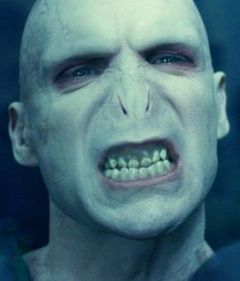
This is the original medallion from his grave marker.  It was replaced with a bronze one when the weather caused his face on this one to resemble Voldemort more than Poe.

If the Babe Ruth House is tiny, this would be minuscule.  I honestly don't know how five people lived in it.  This is The Dormouse climbing up the stairway to the attic room.   She fills up the entire staircase.  She's seven.


This is me looking down from the top of those stairs:

I know, my socks are awesome.

I like to imagine him writing at a desk in this attic room while looking out the window over the countryside and thinking about all the weird things he could throw into his next story.  The truth is, you have to go through what was probably his Aunt's room to get to it, so it probably wasn't a room he occupied that much in Victorian America.  Still it's a nice image.


This bust of Poe stands in the entry room of the house.  I loved the shadow the flash threw from this angle.  It was only after I got home and was looking through the photos that my family reminded me that the curator had told us that we could take photos wherever in the house we wanted, just not in this room. I, then completely forgot he'd said this and tromped back into the very room where the curator was standing and took all kinds of photos.  I may be an ass, but he didn't say anything.  I guess it's more of a guideline.


Share:

Striking Out

Posted on 4/29/2011 10:35:00 AM In:
Another little-known historical place in downtown Baltimore is the still-standing house where George Herman Ruth - better known as The Babe - was born in 1895. 


I've always been a baseball fan, more so than any other sport.  But even I have to admit that my enchantment with the sport has as much to do with its rich history as the sport itself. My speech is littered with baseball references even baseball fans don't catch because they come from events that happened well before anyone around was born, like the Black Sox scandal in 1919. "Say it ain't so, Joe" is something my kids hear me say often and with great sarcasm.  I'll see any baseball movie that comes out and once watched the entire Ken Burns documentary three times back to back before it had to go back to the library.  Not being all that interested in the sport itself, but totally obsessed with the sport's history; it's all a part of the wondrous variety that makes up my psyche.  You may now pause to pity my husband for having to put up with me.  

We were tottering around Baltimore last week and ended up wandering in Pigtown (They don't call it this anymore; I just like saying "Pigtown."), when I remembered that after I first moved to the area, I'd spent a lot of time at Camden Yards and the Sports Legends Museum and the Babe Ruth birthplace was a little more than an outfielder's throw from that.  My traveling companions aren't that interested in baseball, but seeing as this is a building built in 1895 which still stands, I thought it would be fun to stop by the Babe Ruth Birthplace and Museum:

By the late 1960s, the property and adjoining three row-house structures had fallen into disrepair and were scheduled for demolition. Hirsh Goldberg, press secretary for Baltimore's Mayor Theodore McKeldin, launched a successful campaign to save and restore the Birthplace, which opened to the public as a national shrine in 1974. The not-for-profit Babe Ruth Birthplace Foundation, Inc. was formed to govern the operation. Exhibits depicting the Historic House and life and times of Babe Ruth were installed with the help of Babe's widow, Claire; his two daughters, Dorothy and Julia; and his sister, Mamie, who was also born at 216 Emory Street. 

This photo is not actually of Emory Street, it is a perpendicular street to Emory street. But I liked the ancient-looking cobblestones juxtaposed with the brand new cars and guy with the tattooed shoulder unloading his trunk.  Emory Street has been paved, so this is probably a lot closer to what it looked like long ago:
  

The actual house he lived in is the second of four in a rowhouse.  The museum now encompasses the entire row and the interior walls have been blown out to accommodate the memorabilia and exhibits but even given that, it is TINY with a capital TINY.  You can't pass a person in the hallways without brushing shoulders.  Then stop to consider that the Ruth family lived in only one of the houses (in the first photo above, you see their door and the parlor window directly to its right... the next window to the right belonged to the next house over)... well... I don't know how they lived there without killing each other.

 Front parlor from the inside.

 Staircase up to the second floor, only open to staff.  Probably for good reason, as more than two patrons in there would be like a phone booth packing contest.


Babe Ruth was known as the Home Run King and he changed baseball forever.  His charisma drew crowds and made the sport more popular than it had ever been.  He was a complicated dude, who lived hard and fast but was also charitable and kind to adoring fans, especially children.  But the thing that I find the most interesting about Babe Ruth is that in addition to being the Home Run King, he was also the Strike Out King of his time.  People who came to see him play were just as likely to watch him walk back to the dugout after trying and missing, as trot around the bases (though as he aged, he often even had someone do that for him) to excited cheers.  When he retired in 1935, his one thousand, three hundred and thirty career strikeouts was a Major League Baseball record. That record was broken in 1964 by Mickey Mantle. 

I tried to explain this to The Dormouse as we walked along the tiny hallway to the bedroom they think he occupied.  That he was very good at what he did, but the thing that made him very good was that he never gave up.  He always tried to get a home run.  He was never satisfied with a base hit.  And even though he didn't always make his goal, he still kept trying.  I hope that's what she remembers about Babe Ruth. 

"Don't let the fear of striking out hold you back."

- Babe Ruth

Share:

We have some relatives in town and The KingofHearts took a day off to show them around.  He decided to spend at least one day at the Inner Harbor in Baltimore.  I was working and couldn't go with them, so before they left in the morning, I said, "Be sure to take them to Fort McHenry.  That's really cool and it would be a good educational experience for the kids.  They can go back to school and tell their teachers they saw it when they get to that lesson in history class."

"Great idea," he said.

Someone asked, "What's Fort McHenry?"

For those who didn't sit through that filmstrip about Francis Scott Key at least fifty times in elementary school like I did, Fort McHenry was a key defensive fort on the Chesapeake Bay for many years and was integral during the War of 1812.  Key happened to be on a British ship in the Bay, attempting to negotiate the release of some prisoners when Baltimore Harbor was attacked by the British.  When the bombing started, diplomatic courtesies were suspended and none of the Americans on the ship was able to return to land.  All they could do was watch the attack on Fort McHenry throughout the night with no news about what was happening.  (A cell phone or two would have made life a lot easier back then!) The next morning when the smoke cleared, Key was thrilled to find that the giant flag General Armisted had ordered made was still flying, which meant that the Fort was still under American control.  Key was inspired to write a poem, which he titled "Defense of Fort McHenry." It was later set to music and popularized as "The Star Spangled Banner."  Weirdly though, it didn't officially become our national anthem until 1931.  Before 1931, there was no official national anthem.  Kinda makes you wonder what they played at the Olympic Medal Ceremonies before then, doesn't it?

Hey, look, 8th grade Social Studies class is good for something after all!

Anyway, it's a really cool star-shaped fort (each of the points being a place where there could be artillery cover for its neighboring points) and there's lots to do.  I think my favorite view of it is from above because you can really see the defensive architecture:


The Wonderland brood, minus me and the girls, spent the whole day at the Inner Harbor in Baltimore and when they came home, I asked how it was. 

Me: "Did you get to go out to Fort McHenry?"

KoH: "Yeah, but it was boring.  There's nothing there."

"Ummmm... there's a fort there."

"I guess, but the only thing at the top is a playground.  I don't know why you told us to go."

"Uh, because it's an historical place.  There's a museum too.  Did you not go inside?"

"There's no museum.  There's just a playground."

"You didn't go inside the fort?  See the armory?  Check out where the soldiers slept?"

"We looked at the cannon, but that was about it.  The kids played on the playground while we just looked around at the Science Center and the Aquarium."

"Last time I was there, there wasn't a playground.  And... You can't really see those things from Fort McHenry.  It's not even in the line of sight. Wait... there's a cannon on Federal Hill, DID YOU JUST TAKE THEM TO FEDERAL HILL AND TELL THEM IT WAS FORT MCHENRY?"

*blink, blink* "Huh?"

Short answer:  yes, that is EXACTLY WHAT HE DID.

For those who don't live in the vicinity, Fort McHenry is point A on the map below and Federal Hill is point B, a little over two miles away:


You can't see Fort McHenry from where they were standing without a magical telescope that looks around corners or at least through buildings.  

This tickles me to no end because a) we have lived in the area for fifteen years, b) as such, we have spent a great deal of time in Baltimore, the Inner Harbor particularly and c) I am almost 100% certain he has accompanied me to Fort McHenry in the past. (Though he now claims this is not true and he had never been there before. Well, he wasn't there this week, at least.)

The great thing is this has given me a new outlook on company and revolutionizes how I will from now on approach tour-guiding out-of-town visitors when they come to stay and want to see the cities... with only minimal effort on my part: don't take people to the actual place; just tell them they're already there. 

See that house across the street from mine?  That's the White House.
See that big retaining wall in the park up the street?  The Vietnam Memorial.

See that spire on top of the liquor store at the end of the road?  Washington Monument.

And now your tour of D.C. and Baltimore is complete.  Let's go eat nachos.

Showing people around town just got easier.

Share:

Shotty

Posted on 9/05/2010 06:39:00 AM In:
It took me a long time to Google up some history for this photo because I kept seeing "Phoenix Shot Tower" in the search results and I assumed that that was a different building called the Shot Tower, in Phoenix. Not like I haven't spent years of my life in that particular city and know for pretty certain that there is not a famous building in Phoenix called the Shot Tower. ::sigh:: It's early.


The Shot Tower was a lead shot manufacturing facility in operation from 1828 to 1892. Molten lead was dropped from a platform at the top of the tower through a sieve-like device and into a vat of cold water. When hardened, dried and polished, the shot was sorted into 25-pound bags, producing a total of 1,000,000 bags of shot a year--a number that could be doubled if necessary.

Known originally as the Phoenix Shot, then the Merchants' Shot Tower and now the old Baltimore Shot Tower, the red brick tower was erected in 1828. Charles Carroll of Carrollton, a signer of the Declaration of Independence, laid its cornerstone. Over 234 feet high, the Shot Tower was the tallest structure in the United States until the Washington Monument in Washington, DC was completed after the Civil War. This type of building was rare even during the 19th century and today only eleven shot towers remain in existence. Of these four, the Shot Tower is the most outstanding example. This National Historic Landmark is also an excellent example of the simple elegance that can be achieved in the design of industrial architecture.

via

I love driving by this tower because the bricks are so well-laid that if you stare at it long enough, they mess with your eyes and create optical illusions. The horizontal lines start to move and oval shapes appear. (click on the picture to embiggen and you can see it too - or is that just me?) Of course when you do that from a car headed north on I83, it's not the smartest use of your attention. I'm just sayin'.

Share:

A Barnum and Baily World

Posted on 9/02/2010 01:54:00 PM In:
As fascinating as Comi-Con was, we weren't quite ready to say goodbye to the madness after we left. So we decided to drive around Baltimore a bit... mainly because The Dormouse had asked me where they film Ace of Cakes and I, having been there before, told her I'd show her where it is. But also knowing that the good folks at Charm City Cakes weren't going to want us to bother them while they worked with requests to come in and look around, I warned her that we could only drive by and see the building. Stopping to peer in the windows and stare would be creepy and wrong. Besides, you can't really see much through their windows.

So once the twenty-second drive by was accomplished, we needed something else to do.

That's when I reached back into the recesses of my brain to remember a cafe I'd been to three years ago that was pretty cool and I thought the kids would like. The problem was I could not recall the actual name of the cafe, the address, the street it was on, or even the general area. I did, however, remember that there might have been the word "moon" in the title and it was pretty brightly colored from the outside.

I'll have you know that it took me only about ten minutes of driving around aimlessly before I found it. Take that GPS systems of the world!


The Paper Moon Diner is one of the best things about Baltimore; that best thing being that quirky little places like this not only exist, but thrive. There are many, many things I love about Washington, D.C., but I love Baltimore equally as well and for completely different reasons. There is no way in hell a restaurant like this could exist in D.C. but in Baltimore, fun, unique places with awesome food like this are nearly as common as gas stations.

Since this place was 1) AWESOME and b) so full of things to gawk at it was almost impossible to choose from among the fifty or so photos I took to share with you, I narrowed it down to twenty and finally started twitching and shaking, yelling, "Don't make me choose, they're like my babies!" at no one in particular. What that means for you, dear reader, is:

Another long photo essay.

And there was much rejoicing.

The outside planters reminded me vaguely of the Boulder Garden sculpture outside Frank Lloyed Wright's studio. But only vaguely.

The outside of the diner is only slightly less intricate and decorated than the inside.

This little mannequin was blowing kisses into a toilet. Never really got a good angle to show them both.

This lovely lady greeted us in the foyer...

and presided over the army of Pez dispensers, standing in formation below her.

There really isn't an inch of real estate that isn't decorated in one way or another.

See what I mean?

The child care section of the restaurant is conveniently located on the wall above the front door.

As is the telephone company/farm animal division.

This photo seems like it belongs in a Chucky movie... I expect all those faces watching her to come to life and attack her any minute.

Someone is watching ominously from above.

The latest in haute couture.

Mom: keeping watch over the bathroom by night (and day).

This boat hanging upside down from the ceiling reminded me of the Voyage of the Dawn Treader. The Dormouse LOVED this.

I'm irked to no end that this photo didn't come out better in focus, because I didn't realize when I took it that I'd happened to hone in on the seven blocks that spell out "Believe."

When I first looked at this picture on my computer, I thought, "Drat, who walked into my frame and spoiled my photogr.... oh wait, that's not a person."

I believe this is where the "paper moon" reference in the name gets all tied up in a metaphorical bow. But there are probably a few real bows somewhere in there if folks don't want to go the metaphorical route.

Who doesn't want a jar full of plastic, dismembered heads on their counter?
NO ONE, THAT'S WHO!


One of Santa's helpers decided to stick around after Christmas.

So there you have it: The Paper Moon Diner. If you live within a two hour drive of Baltimore, you simply must make plans to go, because you have seen but a small portion of what there is to see. And the vanilla custard french toast is to die for.

Share:

Me in 3 Seconds

My photo
Washington, D.C. Metro, United States
Married, 40ish mom of two (or three, or four, depending on how you keep score) who stepped through the lookinglass and now finds herself living in curiouser and curiouser lands of Marriage, Motherhood, and the Washington, D.C. Metro Area.

Find Something

Twitter Me This

Old Stuff

Ad Nauseum

13 Things (45) aspirations (11) B'more (17) BCitK (39) Beantown (9) bumbo (4) Camp Sweatshop (54) Christmas cards (17) DC (104) Gillian (9) Hoof in Mouth Disease (4) I ♥ the Internet (61) Inappropriate songs (34) interviews (3) it sounded better in my head (8) Kid Jokes (21) marriage (23) memes (18) minutiae (23) NaBloPoMo (14) NC (1) NV (21) NYC (71) ornaments (12) PA (12) pets (39) Philly (2) Photoshop Phun (16) recipalooza (20) Salty (14) VA (22) weepy acres (19) Wild WV (7) Windy (11)

Validation


http://www.wikio.com

Personal Blogs Blog Directory

Alices Adventures Underground at Blogged

mmb

Her Blog Directory Blogs by Women

Personal Blogs
Personal Blogs

Parenting Blogs
SEO services provided by Search Engine Optimization
Add blog to our blog directory.

© Copyright 2006-2011. All Rights Reserved. Content herein may not be reproduced in any form without the express written permission of the author.

Contact Form

Name

Email *

Message *